Posts

2nd SEISS grant now open for applications (started 17 August 2020)

2nd SEISS Grant Applications – NOW OPEN!

2nd SEISS grant now open for applications (started 17 August 2020)

The Government previously announced that, much like the furlough scheme, the Self-Employment Income Support Scheme (‘SEISS’) is to be extended for a second period and in fact it’s now open for applications.

If your business has been adversely affected as a result of COVID-19 on or after 14th July 2020 you can make a claim from 17th August 2020 for the second and final grant.

You can make a claim for the second grant, if you’re eligible, even if you did not make a claim for the first grant. 

Your eligibility for the 2nd SEISS grant must meet the same criteria as those outlined for the 1st grant:

  • you must have traded in the tax year 2018/19 and submitted your Self Assessment tax return on or before 23 April 2020;
  • you must have traded as self-employed in the tax year 2019/20;
  • you must have all intentions to trade as self-employed in the tax year 2020/21;
  • your average trading profits must be less than £50,0000;
  • your trade must have been adversely affected by coronavirus.

Like the first SEISS grant, the second SEISS grant is a taxable one. However, this time, it is based on 70% of your average monthly trading profits. It will be paid out in a single instalment, based on a 3-month period of average profits, and is capped at a maximum of £6,570.

Taxfile will be in touch with clients to remind them. Now that the 2nd grant is available, do feel free to call us if you’d like our assistance in helping you to make your claim.

Please remember the deadline for claiming the first SEISS grant was 13 July 2020. You can start claiming the second SEISS grant now, as it opened to applications on 17 August 2020.

Please call Taxfile on 020 8761 8000 if you need help to make a claim for either of these SEISS grants and we’ll be happy to help. Alternatively, fill in and submit the form below and we’ll be in touch to help you.

    First Name (required):

    Surname (required):

    Email Address (required):

    Telephone Number (required):

    Your Message (please edit as you see fit):

    How did you discover this website today e.g. via a Search engine? (Required)

    Please click the button below to submit the form.

    [Article updated 17 August 2020].

    Christmas & New Year Opening Times at Taxfile

    Christmas & New Year Opening Times at Taxfile

    Christmas & New Year Opening Times at Taxfile

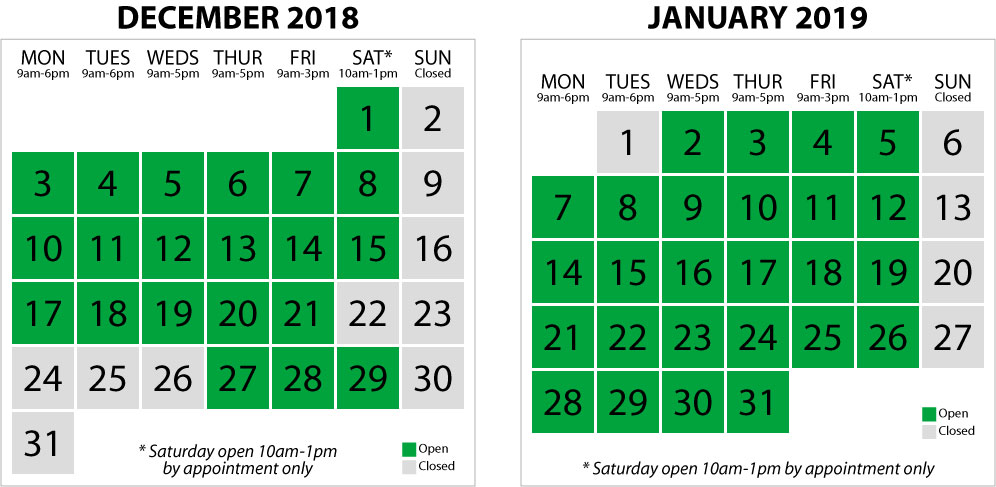
    Please take a look at the calendar above and note our opening times over Christmas and New Year. As you can see, we’re closed on several days over the festive period. This is particularly important for those who need to come to see us for help with time-sensitive accounting and tax-related services in the run-up to January 31st.

    Need Help Filing Your Tax Return?
    Make an Appointment NOW!

    In particular, we urge anyone who needs to file a 2017/18 Self-Assessment tax return to come and see us well before Christmas. By doing so, you’ll avoid the last minute stampede — way too many people leave it until January, which is the busiest time in the tax and accounting calendar. While the HMRC deadline for tax returns is the end of January, you run the risk of being caught up in the bottleneck if you leave things later than December. Taxfile files tax returns for thousands of customers during November, December and January, so we’re incredibly busy at this time of year — particularly January, which is frenetic! So, those leaving it until the last minute not only run the risk of being charged more to cover the long hours and overtime that we need to work during January, but they also risk receiving a fine from HMRC if they miss the deadline completely because they left things so late.

    So the message is: please book an appointment with us now, ideally for a date before Christmas.

    For Self-Assessment tax returns, records for the period 6th April 2017 to 5th April 2018 are required. For business accounts, we will also need to do accounts based upon the business’s individual year end.

    Open for Saturday Appointments

    We are happy to see people on Saturdays at this busy time of year (with the exception of the festive closures of course – see the calendar above). Saturday morning appointments should be more convenient for those who work on weekdays. As you can see on the calendar, we’re open from 10am to 1pm for most Saturdays in December and January but only for those with a pre-agreed appointment.

    To book an appointment, please call 0208 761 8000 or book an appointment online here. Many thanks.

    Letting a room through Airbnb? HMRC tracks your income & data!

    Letting a Room through Airbnb? HMRC Tracks your Income!

    Letting a room through Airbnb? HMRC tracks your income & data!

    Back in late 2015, we forewarned that HMRC was planning to force on-line companies like Airbnb to share customer income data with them. That plan has come to fruition and HMRC is now receiving detailed information from Airbnb and other online providers. The data will tell HMRC about lettings income that may have been previously falling under their radar.

    Airbnb is an on-line marketplace where people can rent out rooms, cottages, apartments and suchlike to those looking for short-term accommodation, city breaks, holidays or lower cost alternatives to hotels and overnight business stays.

    We understand that various on-line providers, including Airbnb, are now exchanging information with HMRC. HMRC then uses their analytical tool “Connect” to track and monitor income from such sources. This powerful application was developed by BAE Systems and is the most advanced data gathering tool HMRC has at its disposal.

    So, if you let property or a room on Airbnb, you can expect detailed information to be passed to the Revenue about your letting activities and the income it generates. While you may currently be able to earn up to £7,500* per year tax-free for furnished accommodation under the Government’s ‘Rent a Room Scheme‘, care needs to be taken to submit a tax return and pay tax on any income received once you have gone over that limit. Higher rate taxpayers also need to take care if their rental income pushes them into a higher tax bracket.

    In order to qualify under the Rent a Room Scheme:

    • The room must be furnished;
    • The relief cannot be used if you let your home whilst living abroad;
    • The accommodation provided cannot be office space or business space.

    Changes arriving in 2019:

    HMRC recently held a consultation with relevant professionals and the public about whether the scheme should continue in its present form. Following this, they have announced that the scheme will be more restricted; landlords who do not live in their “main residence” at the same time as their tenants will probably no longer be able to claim “rent a room relief” from 6 April 2019.

    Tax Help & Advice for Lettings Income

    If you need our help handling your lettings tax needs, Taxfile is here to assist you. We’re tax experts and can guide you through the maze of rules and regulations concerning lettings, renting out accommodation, tax thresholds, knowing when it’s appropriate to work under the Rent a Room Scheme, whether you can claim expenses and so on. Book an appointment at your nearest Taxfile office: for Tulse Hill in London SE21 book an appointment on-line here; book here for Dulwich in SE21. Alternatively, simply call 0208 761 8000 or send us an email here and we’ll be happy to help to get you on the right track.

    Learn more about our services to landlords and those earning an income from property lettings here.

    * Correct for tax years 2016-17 and 2017-18. For tax year 2015-16 the threshold was only £4,250. Also note that the current year’s threshold reduces to £3,750 if someone else, for example a joint owner, receives lettings income in the same property.

    Overseas assests - requirement to correct

    Undeclared Overseas Assets? Beware the ‘Requirement to Correct’ Deadline!

    Overseas assets - requirement to correct

    What does this mean for me?

    If you are a taxpayer with overseas assets which are undeclared as regards income tax, capital gains tax or inheritance tax, you have an obligation to sort things out by 30 September 2018.

    People who ignore this requirement and whose income or assets subsequently come to light will face much, much higher penalties and sanctions after the deadline.

    Why bother now?

    The United Kingdom has signed up for information exchange with a whole host of other countries. The information it receives from them will be input into its intelligence system known as Connect. This increases the likelihood of undeclared sources coming to light.

    What if I do nothing?

    After the deadline date, if your undeclared sources of income or gains come to light, you will face potential penalties as follows:

    • A tax geared penalty of between 100% and 200% of the tax due;
    • A potential asset based penalty of up to 10% of the asset value where the relevant tax at stake is over £25,000 in any one tax year;
    • Adverse publicity from being publicly named as a tax cheat where the tax is over £25,000;
    • A further potential penalty of 50% of the standard penalty if the Revenue show that assets or funds have been moved in an attempt to avoid the requirement to correct.

    If you have a reasonable excuse for failing to correct your tax position, such as failing health for example, then penalties may be reduced or not charged in exceptional circumstances.

    Get Started:

    If you think you might be affected or are in any doubt, we suggest you act now to avoid any problems before the deadline.

    Call Taxfile on 0208 761 8000 for a no-obligation discussion if you want to put things right. Alternatively, book an appointment here. We have a wealth of experience in dealing with voluntary disclosures and negotiating settlements with HMRC, so can definitely help you. We offer tax advice and accountancy services from our offices in Tulse Hill and Dulwich in South London.

    Using 'Trading Income Allowance' to save tax

    Making the Most of your Tax Allowances for Small Trading?

    Using 'Trading Income Allowance' to save tax

    Are you making the most of your tax allowances for small trading? If you have small earnings from self employment, then it may be advantageous to make a claim for Trading Income Allowance i.e. to claim a flat rate deduction of £1,000 for expenses instead of claiming the actual expenses incurred.

    Example:

    Christina has income of £2,360 and expenses for web hosting of £204, software of £103 and publishing costs of £430
    (total expenses £737).

    As her expenses are less than £1,000 she can claim £1,000 Trading Income Allowance in preference to claiming the actual expenses.

    Her taxable profit therefore becomes £1,360 instead of £1,623. So, she pays less tax!

    This is just one simple way in which Taxfile’s knowledge of the tax system can help its customers pay less tax in a totally acceptable way from HMRC’s perspective.

    Contact your nearest Taxfile branch

    Please do contact us for any accountancy work that you or your business(es) require. We’re tax experts and are also very well trusted by HMRC because we deal with them on a daily basis on behalf hundreds of clients. We have several UK branches including in Tulse Hill and Dulwich in South East London. Call 0208 761 8000 or contact us here for more information — we’ll be happy to help you to get your tax affairs in order in the most tax-efficient way.

    New tax planning & tax advice service from Taxfile

    New: Tax Advice & Planning Service

    New tax planning & tax advice service from Taxfile

    You can now get tax planning and tax advice from Taxfile. We have highly experienced senior accounting staff who can give you the right tax advice when you need it most — for example, when your circumstances are changing, if you’ve had trouble keeping on top of your tax commitments and need to bring things up to date, or perhaps a friend or relative simply needs a bit of reassurance with regard to their tax situation. Perhaps you have assets or income abroad as well as income in the UK and want to make sense of your tax position. Or, perhaps you have recently made a tidy profit trading crypto coins like Bitcoin and want to know where you are from the standpoint of Capital Gains or Income Tax. Maybe you need to disclose income from property rental that you have previously not told HMRC about (more about that in a later post). Those are all examples of typical situations where our new Professional Tax Advice and Tax Planning services can help you to see the wood from the trees.

    A Free Telephone Consultation

    In the first instance, we are inviting clients to speak for just 15 minutes with one of our resident tax planning experts. This will be in the form of a free, introductory telephone call, perhaps in February or March if it suits you. We can then see what’s needed and take it from there. We can, of course, discuss any costs with you before you commit to anything further, and there is no obligation.

    Whether it’s about labour taxes, investment taxes, business taxes, disclosures to HMRC or even professional help to support you during an HMRC tax investigation, we can make sense of all the options for you and — in a fair and ethical way — help to make sure you are paying no more tax than you should do. With decades of experience in accountancy and tax planning, we know exactly what’s what when it comes to tax, so can definitely help you. Call 0208 761 8000 to arrange your free 15 minute telephone appointment with a tax expert, at a mutually convenient time. Alternatively, Read more

    Tax returns & tax refunds, South London

    Need help with your 2016-17 tax return?

    Tax returns & tax refunds, South London

    Act fast to save money!

    [Updated 21 December 2017] Do you need Taxfile to sort out and file your tax return? We’d be very happy to help and do well over 1000 Self Assessment tax returns for customers every year.

    However you need, please, to start giving us your paperwork ideally during December or, at a push, up to the 10th January 2018 absolute latest if you are to avoid the price increases that may come into effect thereafter. (Price increases are sometimes necessary during the busiest accounting months of the year in order to cover the extra staff needed, overtime for long hours, evening and weekend work, particularly to work on returns for those who have left it until the last minute. After 10th January, the accounting world goes mad as everyone tries to hit the January tax return deadline all at the same time — we’ll have something like 400 last-minute tax returns to do in one crazy month). So the message is:

    Avoid both the bottlenecks — and a likely price increase from 10th January 2018 — by coming to see us for your tax return as soon as possible. You can book your appointment online at taxfile.co.uk/appointments/ or call the office on 0208 761 8000 (07766 495 871 after hours). If English is not your first language we can still help, as our team speaks a variety of languages.

    Please don’t leave it to the last minute – thank you.

    We’ll require your records, figures and receipts for the financial year 6 April 2016 to 5 April 2017.

    This Week Only – Beat the Tax Return Price Increase!

    Beat the Tax Return Price Increase

    Beat our 2017 price increase and get your tax affairs in order before the January rush by coming in to see Taxfile for your Self Assessment tax return before December is over.

    It might be Christmas week for many but our staff are ready and waiting to help you get your figures correct and to fill out your tax return for you before the January rush. When complete, we’ll submit it to HMRC for you so you can relax for the start of the New Year, avoid any bottlenecks AND save money.

    During January some of our prices will increase just a little, as forewarned in our previous post. This is simply to cover some of the overtime and extra hours that Taxfile staff will need to work during January, our busiest time of year, covering all the last minute tax returns. But don’t leave it until January — book an appointment with us during the remainder of December and you’ll save! Call 0208 761 8000 or book an appointment online here.

    Tax reforms coming in 2018

    Big Changes Coming to the Tax System

    Tax reforms coming in 2018

    Starting on 1 April 2018, a brand new tax system, one that will affect most business owners in the UK, will begin to roll out. Whether you’re a landlord, are working for yourself as a sole trader or have a limited company, the changes will affect you.

    So what’s happening?

    Instead of a once-a-year tax return, HMRC will require quarterly profit and loss information. So, that’s four times a year. For Taxfile clients, that means we’ll need to know all your income and expenses during every quarter so that we can make the necessary financial data available, on your behalf, to HMRC. As well as your bank statements, we’ll need to see receipts for the expenses, whether they’re provided physically or via a suitable electronic medium (there are plenty of apps and software packages for this purpose). Once we have everything for the quarter in question, we will be able to make sure that you’re claiming for all the allowable expenses that you are eligible for and aren’t claiming for things that you shouldn’t, so that your figures are absolutely correct.

    If you don’t file in time there could be an HMRC penalty, so letting Taxfile handle your quarterly reporting will help to keep you on track seamlessly when the new changes come into force. We’ll be able to confirm our own pricing nearer the time but it’s likely to be circa just £75 per quarter, excluding VAT.

    A ‘cash basis’ system

    The new tax system will be known as a ‘Cash Basis’ system and will also allow tax to be paid to HMRC on a pay-as-you-go (PAYG) basis. Essentially, it means that businesses need only calculate their profits based on receipts and payments, which is far more straight forward than the more complex system that currently exists. When integrated into the Government’s new ‘digital tax accounts’, the system will really help to simplify tax, make budgeting and cash-flow easier through near real-time reporting and eventually remove the need for the traditional tax return at the end of the year — that’ll eventually be the case for virtually everyone. As an added bonus it’ll also mean that business owners keep more on top of their bookkeeping and thereby avoid a last minute scramble to update records. Taxpayers will also be able to see a complete financial picture of their tax affairs in the one place — their digital account — and all their liabilities and entitlements will be clear to see and manage more effectively than ever.

    Taxfile

    Nearer the time the changes come into place, Taxfile will be there to help its customers adapt to the new system and between us we’ll make sure that it’s easy and hassle-free. We’ll be able to Read more

    Guy Bridger outside the Tax Office

    “Pay As You Go” Self-Assessment is on it’s way!

    Pay-as-you-go Self AssessmentA few years ago Guy Bridger, from Taxfile, was helping to advise The Office of Tax Simplification and the then Director Michael Jack. Guy proposed that, while the bulk of the working population have their taxes calculated by their employer and thereforGuy Meets Rt. Hon Michael Jacke pay taxes in ‘real time’ with clarity, ease and convenience, the same was unfortunately not true for the UK’s small business owners and the self-employed. For those, it is too often the case that taxes are paid as much as 18 months in arrears because of limitations in the existing tax system. This time lag often means that the tax due to be paid has been spent already, simply because that old system had too large a reporting and payment window. So Guy suggested that ‘real time’ reporting and payments of tax would be significantly more convenient and beneficial to the small business owner and self-employed individual. It would enable them to keep on top of taxes and, as an added bonus, their accounts records too.

    The Government has now recognised this good advice. In a new system nicknamed ‘Pay As You Go Self-Assessment’, the Chancellor has announced that small businesses, landlords and self-employed workers making more than £10k in profit each year will be able to account for tax in virtually “real time”. This will be made possible via Read more