Don’t delay – book an appointment with Taxfile today or call 0208 761 8000 and we’ll sort it all out for you. We have staff who speak English, Polish, Pashto, Dari, Russian, Malayalam, and Dutch, should you need them on the day. Our Tulse Hill office is at 25 Thurlow Park Road, London SE21 8JP. Call 0208 761 8000 or book an appointment — the first 20 minutes is free! Alternatively, you can have a ‘virtual’ appointment with us on Zoom, Teams, Google Hangouts, Skype, FaceTime, WhatsApp or whatever you prefer.
We’re open from Monday to Saturday in April & May including early evenings on Mon/Tues
Our Tulse Hill office is open 6 days a week during April & May and offers Saturday morning appointments plus early evening appointments on Mondays and Tuesdays if standard office hours do not suit you (please see the footer of this website for details or simply call us).
Do you have different accounting dates from the standard 6th of April to the 5th of Apri?
If you answered YES to both questions, some IMPORTANT changes will apply for the tax year 2023-24.
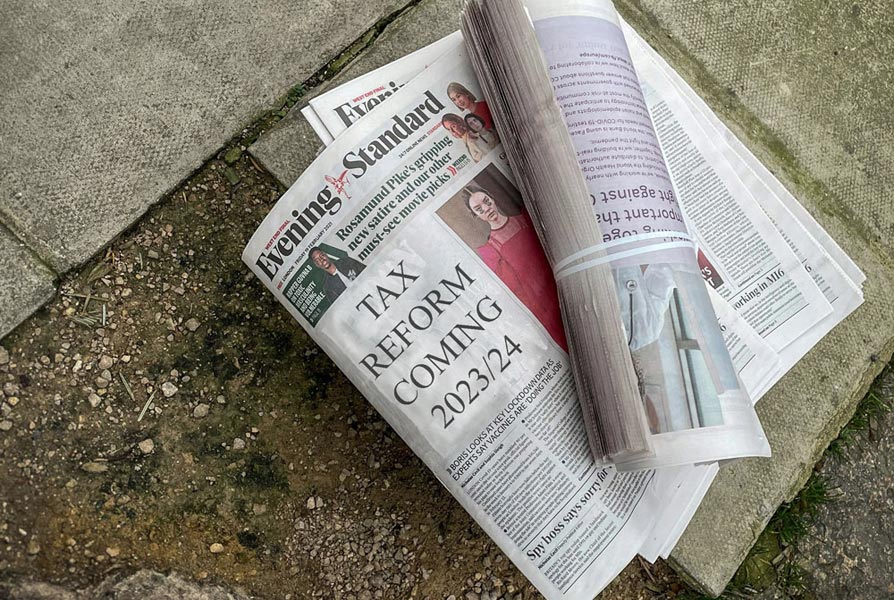
The concept of the basis period determines the time frame used to calculate taxable profits or losses for self-employed individuals, partnerships, and some trusts. It marks a departure from the traditional “current year” basis, where business profits were taxed based on the accounting period ending within the tax year. Instead, it introduces a “tax year” basis, aligning taxable profits with the UK’s standard tax year, running from 6 April to 5 April. Read more
https://www.taxfile.co.uk/wp-content/uploads/2023/12/Basis-Reform-Period.jpg8781000Taxfilehttps://www.taxfile.co.uk/wp-content/uploads/2020/03/taxfile-logo-2020.pngTaxfile2023-12-21 15:25:212025-06-12 13:22:37Understanding Basis Period Reform for Self-Assessment Tax in the UK
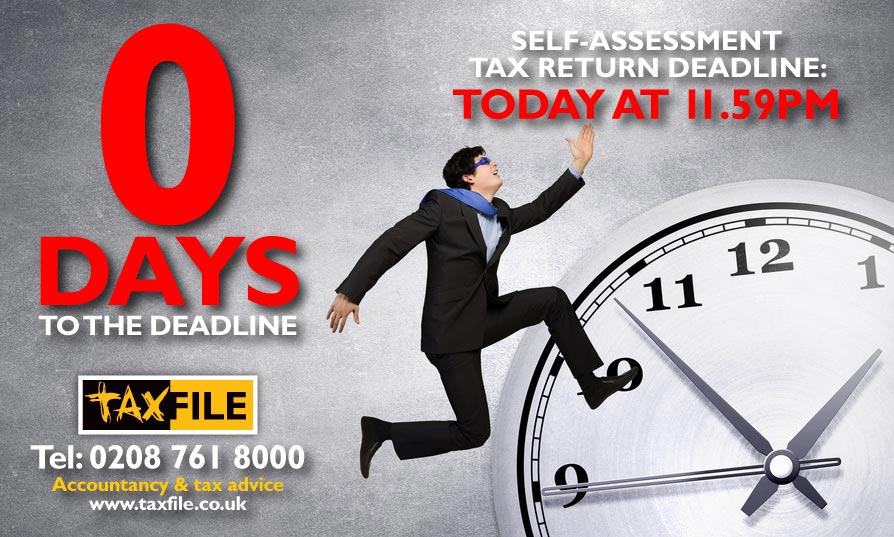
[As at 1 February 2023]: The 31st January was the Self Assessment tax return and tax payment deadline. Miss the deadline and you’ll be in for a £100 HMRC fine right away. Interest will also be charged from 1 February, as usual, if tax is not paid by midnight on 31 January (rules apply). Time is short, so contact Taxfile for help with your tax return as soon as possible please. Book an appointment* with one of our helpful tax advisors and accountancy experts TODAY — we’ll make it easy!
https://www.taxfile.co.uk/wp-content/uploads/2017/01/0-DAYS-featured-square.jpg338338Markhttps://www.taxfile.co.uk/wp-content/uploads/2020/03/taxfile-logo-2020.pngMark2023-01-29 11:48:182023-02-01 12:24:4731st January was the Self Assessment Tax Return Deadline!
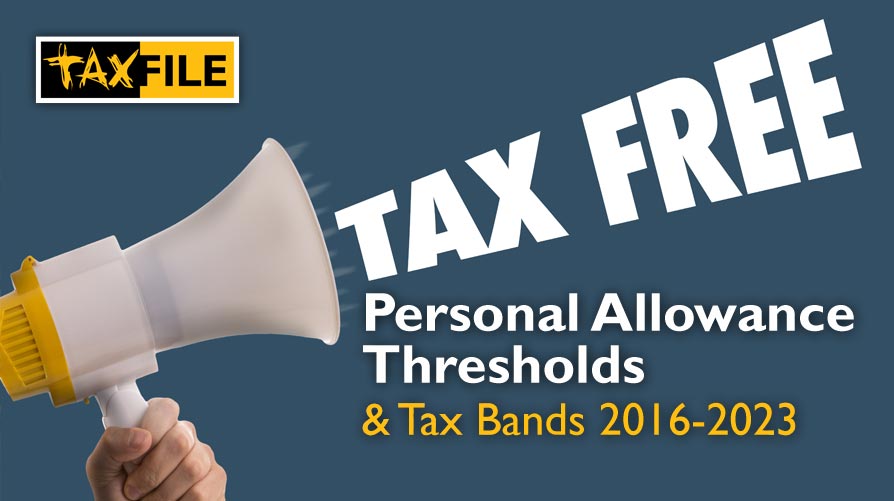
Today we look at the tax-free allowance thresholds for what’s officially known as the tax-free Personal Allowance in the tax and accountancy world.
The Tax-Free Personal Allowance
This is the amount a UK individual can earn as income before they have to pay any Income Tax. In the current tax year (6 April 2022 to 5 April 2023) individuals can earn up to £12,570 before they have to start paying Income Tax, as you’ll see in the first table. In other words, if their taxable income is two thousand pounds more than that, they’ll only have to pay income tax on the extra £2000, not the core £12,570. There are exceptions, and different rules applied before 2016/17, but our aim is to keep things simple in this guide rather than focusing on more rare exceptions. So, below, we show the Personal Allowance thresholds for tax-free income over the last 7 tax years. As you will see, the Tax-Free Personal Allowance has gradually increased over the years.
Tax Bands for Basic Rate, Higher Rate and Additional Rate Taxpayers
The tables also show the various tax bands for earnings above the Personal Allowance threshold. These are the Basic Rate, Higher Rate and Additional Rate income tax bands, with tax rates increasing the more people earn. The information might be useful if you owe income tax from previous years but bear in mind that anyone born prior to 6 April 1948 may be entitled to a larger Personal Allowance.
Please note: this guide focuses only on Income Tax. Taxpayers will also need to allow for other deductions like National Insurance, which we’ll cover in a separate guide, and things like pension contributions, any student loan interest repayments, any tax on dividends, and so on.
Tax-Free Allowance Thresholds 2022/23
For the tax year 6 Apr 2022 to 5 Apr 2023:
The first £12,570 (your Personal Allowance) is tax-free*
Earnings between £12,571 and £50,270 are taxed at 20% (‘Basic Rate’ income tax)
Earnings between £50,271 and £150,000 are taxed at 40% (‘Higher Rate’ income tax)
Earnings over £150,000 are taxed at 45% (‘Additional Rate’ income tax)
* For every £2 earned above £100,000, the Personal Allowance is reduced by £1. It therefore reduces to zero for earnings of £125,140 or more.
Tax-Free Allowance Thresholds 2021/22
For the tax year 6 Apr 2021 to 5 Apr 2022:
The first £12,570 (your Personal Allowance) is tax-free*
‘Basic Rate’ earnings between £12,571 and £50,270 are taxed at 20%
‘Higher Rate’ earnings between £50,271 and £150,000 are taxed at 40%
‘Additional Rate’ earnings over £150,000 are taxed at 45%
* For every £2 earned above £100,000, the Personal Allowance is reduced by £1. It therefore reduces to zero for earnings of £125,140 or more.
Tax-Free Allowance Thresholds 2020/21
For the tax year 6 Apr 2020 to 5 Apr 2021:
The first £12,500 (your Personal Allowance) is tax-free*
‘Basic Rate’ earnings between £12,501 and £50,000 are taxed at 20%
‘Higher Rate’ earnings between £50,001 and £150,000 are taxed at 40%
‘Additional Rate’ earnings over £150,000 are taxed at 45%
* For every £2 earned above £100,000, the Personal Allowance is reduced by £1. It therefore reduces to zero for earnings of £125,000 or more.
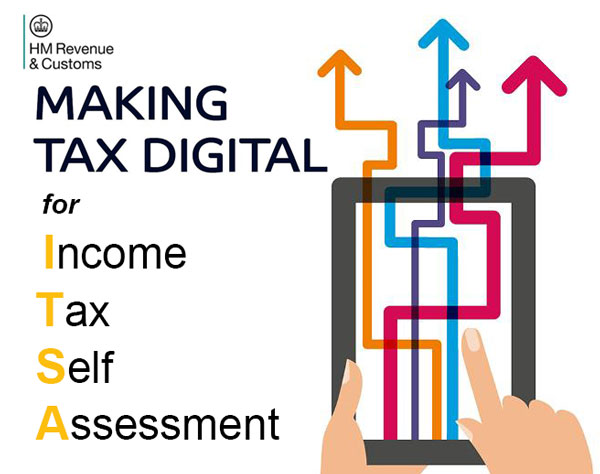
The Government has now pencilled in what they regard as a firm date to implement MTD for IT, for all landlords and business owners that have an income above £10,000.
The next accounting period starting on or after 06/04/2023 that meet the above mentioned criteria will need to be compiled & submitted via MTD-compatible software.
If you are self-employed or a landlord with a turnover greater than £10k, how will MTD affect you?
1. You will need to submit a quarterly summary of your businesses income & expenses to HMRC using MTD-compliant software. Yes, you read that correctly. No longer can you do your tax return in one go, with a lot of our customers leaving it to December or even January before they come to see us. As your tax agents, we would need your business transactions every 3 months, to compile, compute, and submit through to HMRC.
The timing of the quarterly updates is determined by the accounting period of the business but typically the 4 quarters will be:
6 April to 5 July
6 July to 5 October
6 October to 5 January
6 January to 5 April
2. All your income and expenses will need to be individually logged electronically. The technical term used is that every business transaction will have an ‘electronic signature’. These signatures will then be submitted to HMRC every 3 months and you will receive an estimated tax projection for the year based on the information provided.
3. At the end of the year, any non-business information, foreign income, other income, etc is added to finalise your tax affairs and submitted using the MTD-compatible software. This replaces the need for a Self Assessment tax return. You will then have Read more
https://www.taxfile.co.uk/wp-content/uploads/2020/09/MTD-for-Income-Tax-Self-Assessment.jpg474600Taxfilehttps://www.taxfile.co.uk/wp-content/uploads/2020/03/taxfile-logo-2020.pngTaxfile2020-09-01 13:52:522025-06-12 13:27:48Making Tax Digital for Income Tax Self Assessment (MTD IT). Are you ready?
We may request cookies to be set on your device. We use cookies to let us know when you visit our websites, how you interact with us, to enrich your user experience, and to customize your relationship with our website.
Click on the different category headings to find out more. You can also change some of your preferences. Note that blocking some types of cookies may impact your experience on our websites and the services we are able to offer.
Essential Website Cookies
These cookies are strictly necessary to provide you with services available through our website and to use some of its features.
Because these cookies are strictly necessary to deliver the website, refusing them will have impact how our site functions. You always can block or delete cookies by changing your browser settings and force blocking all cookies on this website. But this will always prompt you to accept/refuse cookies when revisiting our site.
We fully respect if you want to refuse cookies but to avoid asking you again and again kindly allow us to store a cookie for that. You are free to opt out any time or opt in for other cookies to get a better experience. If you refuse cookies we will remove all set cookies in our domain.
We provide you with a list of stored cookies on your computer in our domain so you can check what we stored. Due to security reasons we are not able to show or modify cookies from other domains. You can check these in your browser security settings.
Other external services
We also use different external services like Google Webfonts, Google Maps, and external Video providers. Since these providers may collect personal data like your IP address we allow you to block them here. Please be aware that this might heavily reduce the functionality and appearance of our site. Changes will take effect once you reload the page.