Posts

Faiz from Taxfile - Helping the Community with Tax Problems

Faiz from Taxfile – Helping the Community with Tax Problems

Faiz from Taxfile - helping the South London community with their tax problems

Hello; I’m Faiz Mazloumiar. I have been working for Taxfile since May 2005, mostly doing tax returns for subcontractors, self-employed individuals, partnerships and landlords. I specialise in helping clients who, for whatever reason, have fallen behind in their tax affairs, assisting in making disclosures to HMRC whilst trying to minimise the penalties imposed on them over the years. I always aim to put our customers first by calling HMRC to try to cancel recent years’ penalties, then I submit any outstanding tax returns. When I submit the tax returns I also do an appeal for older years’ penalties to be revoked. In many cases HMRC accept my appeals and clients get their money back for anything they have had to pay. I am always fighting for my clients and I have been known to battle on behalf of them for over a year.

I also help many people in our local community who are on PAYE but perhaps do not know if they are paying the right tax and NI contributions. It is a little like charity work. When people from the local community bring in their P60, I will check it and give them advice on how to contact HMRC and ask for a refund if they have overpaid. When new clients come with any problems, they are usually very stressed and anxious and sometimes don’t understand the intricacies of the UK tax system. We aim to help them with their tax problems, so they can leave us feeling relieved and a little happier. When I help clients they trust me and I have grown my client base only through recommendations. It is very exciting and satisfying for me to be able to help my clients and community as a whole.

Contact Taxfile, South London’s Favourite Tax Accountants

For any tax- or accountancy-related needs, contact us. We’d love to help! Call Faiz direct on 020 8655 7891 or speak to our main switchboard on 020 8761 8000. Alternatively message us your tax-related query here. We also offer a free 20-minute introductory appointment and this is available in person, through a video call (Zoom, Teams etc.) or via telephone — whichever you prefer. We are accountants and tax advisors in Tulse Hill and Dulwich, South London.

This post was brought to you by Faiz at Taxfile.

PAYE, 2021/22 Tax Thresholds, Employment Allowance & P800s

PAYE, 2021/22 Tax Thresholds, Employment Allowance & P800s

PAYE, 2021/22 Tax Thresholds, Employment Allowance & P800s

My name is Daniel and I have been a part of the Taxfile family since 2007. It started as a part-time job doing bookkeeping, but as time went on, I developed new abilities and a deeper understanding of the tax world. PAYE, VAT, and Company Register are now my areas of expertise.

I understand how complicated the tax world is, so here are a few PAYE things to consider:

Understanding the tax thresholds for 2021-2022

PAYE is calculated based on how much you earn and whether you are eligible for the personal allowance.

  • Standard Rate: PAYE income tax is charged at 20%, less a personal allowance of £12,570, this is signified by tax code 1257L.
  • Higher Rate: For most, income over £50,270 to £150,000 is charged at 40%.
  • Additional Rate: Income above £150,000 is charged at 45%.

What is the Employment Allowance?

The Employment Allowance allows certain businesses that employ workers to reduce their annual National Insurance (NI) bill by up to £4,000 (for the 2021/22 tax year).
Eligible businesses can claim a reduction against their employer’s Class 1 NI liability up to a maximum of £4,000 each tax year. You can still claim the allowance if the liability was less than £4,000 in a tax year.

You can’t claim if you’re a company with only one employee paid above the Class 1 National Insurance Secondary Threshold (£8,840 for the 2021/22 tax year, up from £8,788 for the 2020/21 tax year) if that employee is also a director of the company.

How will I know if I haven’t paid the right amount of PAYE?

HMRC will send out a P800 tax calculation form after the tax year ends on 5 April, which you should receive by the end of November. This will show how much tax is due to be refunded, or is owed for previous years.

Another significant aspect of Taxfile is that it works with a wide range of accounts software (Sage, QuickBooks, Xero, FreeAgent, VT, Forbes, Moneysoft, and so on) and can accommodate everyone. These are just a few examples, but if you need assistance with any area of PAYE, VAT, or other types of tax, Taxfile and the team are here to help. Call Taxfile on 020 8761 8000, book a free appointment (in-person and phone or video call options are available) or simply message us your tax-related query and we’ll be happy to help. We are accountants and tax experts in South London.

This post was brought to you by Daniel at Taxfile.

Get peace of mind by using an experienced and friendly team of tax advisers and accountants

Peace of Mind from Using an Experienced Tax Team

Get peace of mind by using an experienced and friendly team of tax advisers and accountants

When using Taxfile, you are using an experienced team that will make dealing with your tax affairs seamless. A lot of clients start by coming into our office stressed and overwhelmed, not knowing where to start. Using your current position and needs, we plan a step-by-step approach to keep you on top of your affairs and the relationship between you and HMRC harmonious. Once you are officially on board with us, we will have access to your HMRC record and, with our dedicated agent lines to HMRC, we’ll be able to speak to them on your behalf. This way, you are free from having to call them yourself and wait longer than we do for a call handler. You can also have any issues or queries explained to you in an easy to understand way by our friendly team. If you receive any letters that from HMRC and you don’t understand anything, we will be able to take a look for you and explain what it’s all about.

Any fee you pay Taxfile is tax deductible, so will be put on your tax return and result in a reduction of tax.

Our up-to-date knowledge of the tax system will give you peace of mind, alleviate any anxiety you may have and make the whole experience very different to how a lot of people find it when they are not using a team like ours. We know the best way to approach a tax situation that, without our experience and knowledge, could otherwise result in a lot more time and money being spent unnecessarily. From something as small as missing a tax return deadline, it can spiral into something a lot bigger, potentially including penalties, late payment interest, debt collection agencies being involved and so on. We inform all our clients of upcoming deadlines, for their particular tax situation, and let them know what needs doing and when, avoiding this situation and many more.

Unlike a lot of other companies, our tax experts and accountants are approachable, accessible and happy to help. We’re a unique tax advisor and accountancy practice like no other, with offices in Tulse Hill and Dulwich. We can help with any tax-related issues, including bookkeeping, filling in a tax return, limited company accounts, help accounting for property lettings tax refunds and anything accountancy-related. Call Taxfile on 020 8761 8000, book a free 20-minute appointment with us (remote or in-person options available) or simply email us your tax-related query here.

This post was brought to you by Julie at Taxfile.

Taxes & Cryptocurrency

How crypto currency in the UK is treated for tax by HMRC

According to HMRC, ‘cryptoassets’ are cryptographically secured digital representations of value or contractual rights that can be:

  • transferred
  • stored
  • traded electronically

There are various types of cryptoassets including exchange tokens, utility tokens, and security tokens. HMRC does not consider cryptocurrency to be currency or money & their complete Cryptoassets Manual can be found HERE.

As far taxes are concerned, investing in cryptocurrency is akin to investing in other assets such as stocks, bonds, and the sale of rental properties.  This means that capital gains and losses rules apply when you ‘dispose’ your assets, and in this case your cryptocurrency.

HMRC explains that disposals include:

  • selling cryptocurrency for money
  • exchanging cryptocurrency for a different type of cryptocurrency
  • using cryptocurrency to pay for goods or services
  • giving away cryptocurrency to another person

Any of the above situations subject any profits to Capital Gains Tax (CGT) and the simple formula for calculating capital gains (or losses) is:

Fair Market Value – Cost = Profit or Loss

The fair market value is the market price of the asset at the time that you sold, traded, or disposed of it.  The cost is the price you paid at the time of the purchase.

Although this is a simple and logical calculation, calculating CGT on your profits becomes a bit more complex when you have multiple transactions to account for.  The UK requires a specific type of method for calculating the cost basis of your coins known as Shared Pool Accounting also known as a 104 Pool.

With the shared pooled accounting method, you are essentially Read more

Tax “Payment Plans” are ENDING – Act NOW if you Owe Tax!

Tax Debt “Payment Plans” are Ending - Act NOW if you Owe Tax!

Are you late paying your tax? Do you owe unpaid tax for the last financial year, or earlier? Are you struggling to pay it?

Taxfile has recently been helping some of our customers with tax debts from 2019/20 and earlier. In particular, we’re helping them to arrange payment plans with HMRC as part of their ‘Time to Pay‘ scheme. This spreads the cost of those tax debts instead of paying them off in one go. This is really useful to those who are struggling financially following the pandemic. The new payment plans are only available until 1 April 2021, though, so really you should apply by 31 March 2021. Our advice is to act now if you are in a position to take advantage of the payment plans while they’re still — just about — available.

The benefits of arranging a tax payment plan now

Agreeing a payment plan with HMRC will help avoid the 5% late payment penalty that’s usually charged on outstanding tax not paid by the deadline. And, of course, spreading the cost helps those who might otherwise struggle to get together the full amount in one transaction. The HMRC interest rate seems relatively low too.

How Tax Payment Plans have gone so far

What we’ve found so far is that Read more

Latest e-Newsletter Confirms Important Updates

Latest News on Gov. Grants, Support, Loans, Deadlines & More

Latest e-Newsletter Confirms Important Updates

Don’t miss our latest newsletter. Published just this week, it includes several updates on the latest Government support for small businesses during the pandemic, including:

  • a possible 4th SEISS grant coming for the self-employed and …
  • extensions of both the Job Retention Scheme (‘furlough’) ….
  • and Bounce-Back Loan Scheme.
  • There’s also a useful link where you can check what help may be available to you using a simple but genius interactive interface.

The newsletter also includes imminent deadlines that may affect you and news about a significant VAT change that will affect the entire Construction Sector.

Have you submitted your Self-Assessment tax return for the year 2019-20? It’s due in a few days! Learn more in the newsletter or get the ball rolling here.

Have you paid any tax you owe for the same period? It’s now overdue if not. Also see the newsletter for more information contact us using the yellow buttons below.

Learn much more about all these topics and more in our latest e-Newsletter, which can be viewed here. For help with any tax or accounting related issue, simply contact us and we’ll be happy to help. Choose an option below …

Book an Appointment
Send us a Message
T: 020 8761 8000

HMRC Extends the Self-Assessment Submission Deadline to 28th February BUT Payments still need to be made by 31st January

Self-Assessment tax return deadline extendedto February but tax needs to be paid by 31 January

Yesterday HMRC made an 11th hour decision to give the remaining 3 million tax payers an additional 28-days to file their tax return electronically.

For most, a submission after the 31st of January would have resulted in a £100 late filing penalty.  With planning already underway at HMRC on how to cope with the administrative task of appeals around COVID & late filing, HMRC has decided to only issue the penalties after 28th February, effectively offering a 1-month extension on the electronic submission of self-assessment income tax.

However, the payment date for taxes remains unchanged, so it is important to note that taxpayers are still obliged to pay any tax they still owe (including any deferred payments) by 31/01.  In fact we are advising our clients to pay as much as they can into their HMRC self-assessment account and to view it as a bank account with HMRC so that, once their taxes are filed, they are not left with any unwanted surprises with interest on late payments, as any unpaid tax from 19/20 will be charged interest as of 01/02.

The extension has been welcomed and our own Director Guy Bridger had approached the Treasury requesting this extension.  so even though there is a sense of relief, we are adamant that tax payers realise they need to settle their outstanding tax bill if they can, even if it is an estimate, otherwise they will face HMRC’s low rate of annual interest on late payment of taxes along with the initial surcharge of 5% of any tax unpaid for the 19/20 tax year after 28-days.  So Guy’s suggestion is to pay as much tax as you can before 28th of February.

Please view your UTR as a bank account with HMRC, and any money paid into HMRC’s account with your UTR is money that will sit on your account until it needs to be used up.

So, even though your taxes can now be filed electronically by no later than 28/02, you will need to pay money into your HMRC account by 31/01.  If you still need us to calculate and submit your 19/20 taxes, please come and see us or call us on 020 8761 8000. Even though we might not file them before the 31st January, you will at least know the outstanding amount owed.

Guy Tells No. 10 to Extend Self-Assessment Deadline

BREAKING NEWS: No. 10 Heeds Guy’s Plea — & Extends Self-Assessment Deadline!

HMRC Heeds Guy's Plea & Extends Self-Assessment Deadline!

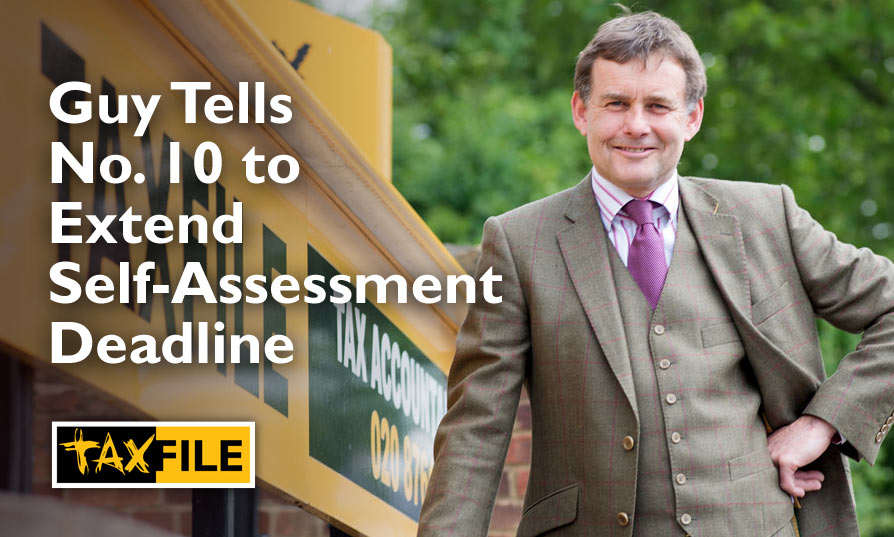
[BREAKING NEWS:] 11 days ago we published a post confirming that Guy Bridger, Taxfile’s founder, had personally delivered a postcard to No. 10 Downing Street, making the case for an extension to the Self-Assessment tax return deadline until the end of February. In Guy’s postcard to Boris Johnson, he had argued that there was simply too much pressure on people during Christmas, the New Year and the month of January, due to the bottleneck caused by the Self Assessment tax return deadline.

Well, in some very welcome good news, it seems the Government has listened to Guy’s plea. This afternoon HMRC confirmed:

“Self Assessment customers will not receive a penalty for filing their 2019-20 tax return late, as long as they file online by 28‌‌ ‌February.”

They went on to say:

“We are still encouraging customers who have not yet filed to do so by 31‌‌ January, if possible.”

This is great news for the people of the UK, in what are otherwise challenging times. Tens of thousands of accountants across the nation will also be hugely relieved. We also suspect that under-pressure HMRC staff will be happy about this development.  Accountants and taxpayers across the UK may well be queueing to buy Guy a drink when the pubs re-open!

It’s important to realise, however, that the tax owed for the tax year 2019-20 will still be due by 31 January. HMRC will charge interest from 1 February as usual. Guy’s company Taxfile is here to help compute the figures, though. For those who wish to take advantage and submit tax returns online during the February extension, but also want pay tax by 31 January in order to avoid interest, we have now published some further guidance here on what to do. That new guidance will help even if you’re not yet 100% sure of the figures, so take a look via that bold link.

Contact Taxfile for Help with Tax Returns & Any Tax-Related Issue

To contact Guy Bridger or any of the helpful tax experts at his company Taxfile, simply get in touch. We’re here to help!

Book an Appointment
Send us a Message
T: 020 8761 8000


You can learn more about Guy Bridger, his involvement at The Office of Tax Simplification and his company Taxfile here. If you would like to read Guy’s original article about the postcard given to Boris Johnson, click here.

Last resort for tax returns this year

Every Day of January is the 31st
Every Day of January is the 31st

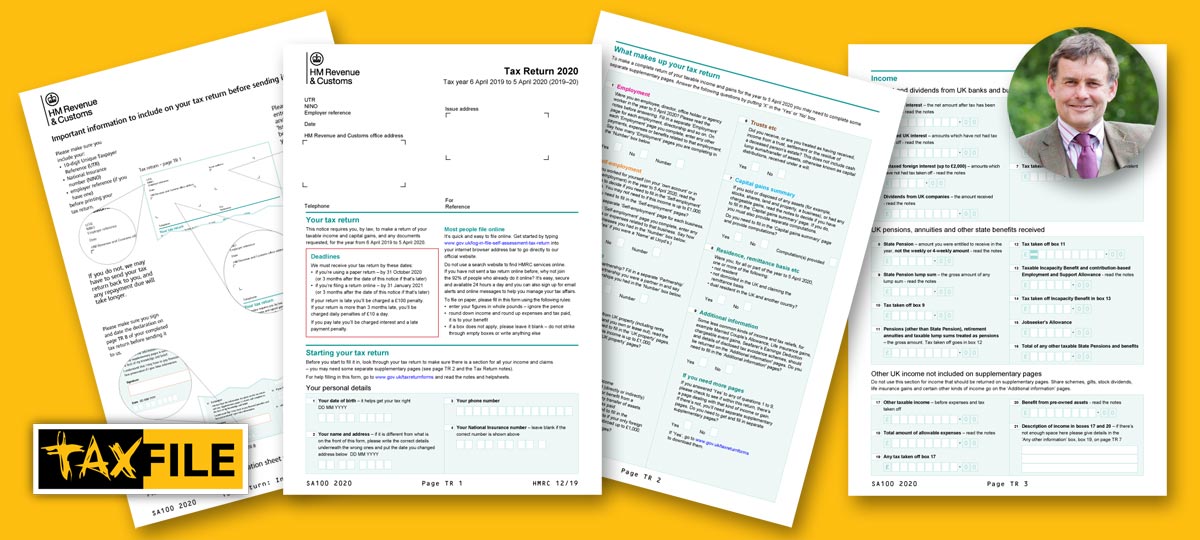
HMRC have announced that those members of the public not able to pay their taxes or submit tax returns on time will be able to appeal against the late filing penalties they will inevitably get this winter. From what we have been hearing HMRC are expecting everyone to have adequate proof of sickness. Does this mean that they will be expected to waste the time of the medical community who, if I am right, are rather busy these days?

What will happen if tax filers struggle with the HMRC online service and cannot get help over the phone, perhaps because HMRC are closing early, not open over the two Sundays, under-staffed on the helplines and rather strangely make you wait 40 minutes in a queue (which has been the case the past year)?

What are people to do?

Buy last minute accounting software from some of the companies climbing on the band wagon to further stress and pressure people into adopting overbearing products and systems designed for businesses not necessarily for sole traders, who probably use their personal bank accounts to get paid, so have mixed use issues? These software products are now being pedalled to the public as the fix-all solution — but who wants to have all their personal bank info imported into a tax and accounting package? Are people expected to analyse every minutiae and, in doing so, become experts on what they can claim or most likely not claim anyway! Or have to master percentages for use of things such as telephone, Internet usage and then apportion in the software (how does this work if at all)?

When I worked with the office of tax simplification we worked out what was actually happening in society and gave it credence;

  • People earn an income from dealing with their clients;
  • They may or may not provide materials or use tools;
  • They may or may not use transport;
  • They probably have some communication and technology costs;
  • Then they may have some professional costs like insurance.

It’s hardly rocket science.

When you come to use the HMRC software it leads you through the maze somewhat similar to the psychology of coping with your first orientation of a new Ikea store!

So I can tell you …

Read more