Saturday Appointments Available - Book Now for Tax Returns & More.

Saturday Appointments Available — Book Now for Tax Returns & More

Saturday Appointments Available for a Limited Time - Book Now for Tax Returns Etc.

Taxfile is open on Saturdays until the end of January, by appointment, with this coming Saturday 24 January 2026 opening from 9 am to 5 pm. We’re also open on Sunday 25 January, from 10 am to 5 pm, by appointment. Weekend appointments might be useful if you need to see us for your 2024/25 tax return, or any other accountancy work, but can’t do it on a weekday. Weekend slots are limited, so please book in urgently if a weekend appointment suits you — before slots are all taken. Late appointments are also available on Mondays and Tuesdays, when we open until 6pm during January, or choose any other weekday if you can come earlier. Please see the footer of our website for latest opening times.

Book in on 0208 761 8000 or book your appointment online (here). We are happy to do virtual (video/phone) or physical appointments at our Tulse Hill office in Thurlow Park Road — whichever suits you best. Read more

Information You Need to Supply for Professional Help with Your Tax Return

Information You Need to Supply for Professional Help with Your Tax Return

Information You Need to Supply for Professional Help with Your Tax Return

[Updated November 2025]: If you’re self-employed in the UK and earn more than £1,000 after allowable deductions, you need to file a self-assessment tax return each year. It’s not only the self-employed, though. If you are on a higher income* or receive untaxed income from things like property rental, tips, commission, savings, investments, dividends, or foreign income, you also have to submit a return. Partners in business partnerships and those who made a capital gain resulting in Capital Gains Tax (CGT) also need to submit a return. You can check here if you’re not sure.

If you do have to fill in a self-assessment tax return, getting all the tax return fields filled in properly and the figures right can sometimes be difficult. That’s where professional help from companies like Taxfile is worth its weight in gold. But what information will your accountant or tax advisor need from you? In today’s guide, we’ll explain exactly what you’ll need to supply.

* (Those earning more than £100,000 for tax years up to and including 2022-23, or over £150,000 for the tax year 2023-24. Higher earners earning only through PAYE for tax years thereafter only need to submit a tax return if their tax was not collected correctly at source). You can check here if you’re not sure.

What Information Do You Need to Supply for Professional Help with Your Tax Return?

If you’re getting help filling in and submitting your tax return through an accountant or tax advisor like Taxfile, a list of what they will need from you follows below. You’ll need to supply information for the right financial tax year, of course, unless you have a different accounting period.

For the purpose of this post today, let’s assume information will be required for the tax year starting on 6 April 2024 and ending on 5 April 2025.

Here’s what will be needed:

Income-related information if applicable:

  • Copies of all employment income documents (P60s, P45s, and P11ds), as well as any unreimbursed employment expenses.
  • Copies of all pension income documents (P60s, state pension notices, etc.).
  • Details of bank and building society interest.
  • Details of all investment income (interest, dividends, etc.), as well as details of any investments that may qualify for relief, such as the Enterprise Investment Scheme.
  • Details of any self-employed income and expenses (schedules and paperwork).
  • Details of any rental income and expenses (schedules and paperwork).
  • Details of any assets that were sold (or gifted) and may be subject to Capital Gains Tax (CGT).
  • Details of any other income received, including foreign income.

Potential tax relief information:

  • Details of any personal pension contributions made from taxed income.
  • Details of any gifts to charity using Gift Aid.

You’ll also need to confirm if there is any other information that may be relevant to the completion of your tax return.

Personal Information:

If you’re a new client or an existing client who hasn’t supplied them already, you’ll also need to provide the following:

  • A copy of your passport or driver’s licence. This is to comply with ‘Know Your Customer’ (KYC) and ‘Anti-Money Laundering’ (AML) regulations.
  • Confirmation of any changes to your personal details, such as a change of address.
  • If you or your partner receive Child Benefit, you’ll need to provide details.
  • If you have a student loan, you’ll need to provide details of the amount you paid during the year and the remaining balance as at April 5, 2025.

Once your accountant or tax advisor receives all of your information, they will be in a position to prepare your tax return. Once approved by you, they will be able to submit it to HMRC on your behalf.

Do You Need Help With Your Tax Return?

Taxfile would be delighted to help you with your self-assessment tax return — or any other type of tax return. We prepare and submit hundreds of tax returns every year for our clients as well as offering all the usual accountancy-related services like bookkeeping, VAT returns, end-of-year accounts for limited companies, arranging tax rebates for CIS sub-contractors and others, accounting for capital gains tax (CGT), payroll, auto-enrolment for workplace pensions and much moreIf it involves tax or accounting, we can help!

For help with any tax or accounting matter, call Taxfile on 020 8761 8000 or book your free 20-minute, no-obligation consultation here. Alternatively, send us a message and we’ll come right back to you. We’re tax advisors and accountants in Tulse Hill near Dulwich (SE21) in the South East. We are open 6 days a week during December and January!

020 8761 8000 Book Appointment Contact Us

We Open 6 Days a Week This Week!*

* Mon/Tues: 9 am-6 pm, Weds/Thurs: 9 am-5 pm, Fri: 9 am-3 pm as usual. Saturday 31 January 2026: 9 am-6 pm by appointment only.


Accountants for Uber Drivers – Are They Needed?

Accountants for Uber Drivers – Are They Needed?

Are you an Uber driver? If so, you need to ensure that you submit an accurate self-assessment tax return each year and, with new rules and data sharing now in place, it’s never been more important to get your figures right. You may therefore be wondering whether you need an accountant. Today’s guide gives Uber drivers an overview of the main rules for complying with HMRC, what they need to supply, and how accountants like Taxfile can help drivers with accounting, bookkeeping and self-assessment tax returns each year. By getting these right, Uber drivers will minimise tax, keep on the good side of HMRC and fulfil their tax obligations. Doing so will also help them avoid a financial mess and, potentially, nasty penalties from HMRC.

Do Uber Drivers Need an Accountant?

As well as doing the job of driving, Uber drivers need to report their earnings and pay any taxes and National Insurance due to HMRC. This needs to be done accurately and on time in order to avoid HMRC penalties. This is more important than ever now because, since 1 January 2024, digital platforms like Uber will be legally required to report drivers’ income directly to HMRC. Professional drivers will therefore need to be 100% accurate in what they report and pay in terms of tax. Therefore, getting expert help from an Uber accountant is recommended — and the accountancy fees are tax-deductible.

“The regulations will support the government’s work to help taxpayers get their tax right first time, and to bear down on tax evasion.” (HMRC)

As part of the process, Uber drivers will need to submit an accurate self-assessment tax return each year. At the time of writing (July 2024), the next one they will need to file with HMRC is for the tax year 2023-24. The deadline is in January 2025 (or 3 months earlier if filing via the old-style paper tax return).

“Drivers remain self-employed for tax purposes and still have to complete an annual tax return.” (Uber.com)*

Tempted to Do Your Own Tax Return?

When Uber drivers log into their Uber account, they will have access to a tax report which shows their earnings and expenses. It may be tempting to use only this information to do their own Self-Assessment tax return. However, the information supplied via the Uber account will not include capital allowances on vehicles purchased and potentially many other claimable expenses like those that we highlight later in this guide. In other words, they could lose out — and pay more tax than they need to! That’s a major reason why employing an accountant like Taxfile makes sense for Uber drivers.

Taxfile: an Uber Driver Accountant in South London

Taxfile’s accountants and tax agents work with many professional drivers every year, including Uber drivers. We are therefore experts at working out income, expenses, National Insurance, income tax, and compliance with HMRC requirements and deadlines. This culminates in us submitting hundreds of self-assessment tax returns for drivers every year. For professional drivers working through digital platforms like Uber, we work out drivers’ income and help to reduce any tax liability by offsetting all eligible expenses. We also help drivers register for Self Assessment when they first start. This gives them a UTR number, which is needed in order to file a tax return.

What Expenses Can Uber Drivers Offset Against Tax?

There are several expenses that Uber drivers can potentially offset against income in order to reduce tax. As you might expect, many stem from the use of a vehicle for the business. Examples include:

  • The part of the driver fees paid to Uber;
  • Road tax;
  • The cost of MOT tests;
  • The cost of maintaining the vehicle e.g. servicing, cleaning and repairs;
  • Fuel costs/mileage (there are several different ways to approach this);
  • The cost of leasing or renting the vehicle;
  • Capital allowances on vehicles purchased;
  • Parking and any toll fees;
  • The cost of vehicle insurance;
  • Accountancy fees associated with running the business;
  • Bank loan interest;
  • Use of a phone, radio, and/or GPS system for the business;
  • Costs associated with marketing the business (advertising etc.);
  • And possibly additional costs not listed here.

Taxfile can advise on all of these to ensure that Uber drivers pay no more tax than they absolutely need to. Such expenses can usually be offset where they apply to business-related use (not personal). Uber drivers must keep comprehensive and accurate records, i.e. invoices and receipts etc., in order to claim.

So, if you are an Uber driver or are planning on becoming one, please get in touch with Taxfile. We’ll help to get you set up for Self-Assessment and subsequently work with you to ensure your figures are correct, your tax return is accurate, and that it is submitted to HMRC in good time before the deadline. By doing so, you’ll know your tax affairs are in order and be able to avoid any nasty HMRC penalties. With our help, you’ll pay no more tax than you need to. You’ll also get a more accurate picture of your finances and help avoid surprises that might otherwise adversely affect cash flow.

Uber Drivers in South London: Contact Taxfile

We offer a free, 20-minute, no-obligation consultation, so you have nothing to lose by getting in touch. We’ll confirm pricing and explain more about how we can help you, with zero pressure.

020 8761 8000 Book Appointment Contact Us

Taxfile are accountants with offices in Tulse Hill in SE21, and Dulwich in South London.

*Are Uber Drivers Employees, Workers, or Self-Employed?

In terms of employment status, Uber drivers in the UK are now legally classed as workers rather than self-employed contractors or employees. This follows a ruling by the UK Supreme Court in 2021 (), which gives them certain employment rights.

However, purely from a tax standpoint, Uber drivers are effectively self-employed, hence the requirement to submit a Self-Assessment tax return each year.

Understanding Basis Period Reform for Self-Assessment Tax in the UK

Understanding Basis Period Reform for Self-Assessment Tax in the UK


Understanding Basis Period Reform for Self-Assessment Tax in the UK

Are you a sole trader or in a partnership? 

Do you have different accounting dates from the standard 6th of April to the 5th of Apri?

If you answered YES to both questions, some IMPORTANT changes will apply for the tax year 2023-24.

The concept of the basis period determines the time frame used to calculate taxable profits or losses for self-employed individuals, partnerships, and some trusts.  It marks a departure from the traditional “current year” basis, where business profits were taxed based on the accounting period ending within the tax year. Instead, it introduces a “tax year” basis, aligning taxable profits with the UK’s standard tax year, running from 6 April to 5 April. Read more

Forming a Limited Company?

Having been the accountants of choice for individuals and businesses in the South London area, we have recently noticed a surge of individuals moving away from the sole trader status and enquiring about forming a limited company.

The reasons for changing status have varied; someone mentioned they should be, their customers needing them to be, being worried about having a personal liability against the business, to hoping to be more tax efficient.

What do we mean by a limited company?

A limited company is an organisation that is set up to run your business. A business becomes ‘limited’ once the company name and its owner(s) have been registered with Companies House and when limited status is granted, it becomes a distinct entity from its owners.

A limited company structure creates a distinct border between the business owner and the business itself, and under the eye of law, the business becomes a separate legal entity in its own right, becoming responsible for its own actions and finances.  This in turn limits the liability of the owner from any risk the business may need to take.    So if you are a small business expanding & possibly needing employees & assets, then a limited company is a good idea.

At Taxfile we are helping a lot more clients make this transition from a sole trader to limited status.

We can help you set up a private limited company, guide your through the process of what happens and what you need to do.  We offer an all-encompassing service from the setting up to filing the corporation tax returns.

We are offering a special price of £375+VAT for the following;

  • company formation (including the option to have the company phrased as a special purpose vehicle for a property rental company- SPV)
  • we will register a single director with HMRC for self-assessment
  • we set up the payroll scheme
  • we arrange your chart of accounts on online software and set up the bank feed so transactions are automatically recorded

A limited company will:

  • need to keep company records
  • report any changes to Companies House & HMRC
  • need to file an annual company tax return along with the company’s accounts, giving an undistorted view of its finances.

As a director of a private limited company you will:

  • make decisions that benefit the company rather than yourself
  • abide by the rules and regulations outlined by the company articles of association, which are written rules about running the company agreed by the shareholders or guarantors, directors and the company secretary
  • notify any shareholders if you might benefit personally from a company transaction
  • always act with the intention of making the company successful.
  • In forming a limited company you are limiting your personal liability but in doing so you cannot abuse your power with the limited liability to take selfish and unnecessary risks.

At Taxfile we can advise you on setting up a private limited company and take care of all these tasks for your private limited company — and avoid any complications down the line.

Starting a limited company is a relatively straightforward administrative task that starts out with choosing an available company name from Companies House to filling and filing a series of forms. At Taxfile we can ensure that all your forms are compiled correctly, providing ongoing support.

To set up your private limited company you will need at least one director and one shareholder.  As the business owner(s) you would then take a salary/wage from the business.  We can advise you how to best set up your salary and dividends to pay less tax.

Once you have a limited company set up you will need to open a new bank account in the name of your new company.  Our advice to clients, is to try and keep all the business income and expenses restricted within this one bank account and to avoid any personal transactions overlapping into this account.

It is also important to remember to transfer all business-related expenses into the company’s name and move any payment plans over to the new bank account.

If you would like help and advice about forming a private limited company please call us on 020 8761 8000.


TODAY is the deadline for submission of your tax return. Contact Taxfile for help filing & avoid a minimum £100 fine!

31st January was the Self Assessment Tax Return Deadline!

Today (31 January) is the self-assessment tax return deadline!

[As at 1 February 2023]: The 31st January was the Self Assessment tax return and tax payment deadline. Miss the deadline and you’ll be in for a £100 HMRC fine right away. Interest will also be charged from 1 February, as usual, if tax is not paid by midnight on 31 January (rules apply). Time is short, so contact Taxfile for help with your tax return as soon as possible please. Book an appointment* with one of our helpful tax advisors and accountancy experts TODAY — we’ll make it easy!

020 8761 8000 Book Appointment Get Started Here
Read more

Key Takeaways from the Spring Statement 2022

Key Takeaways from the Spring Statement 2022

Key Takeaways from the Chancellor of the Exchequer's Spring Statement 2022

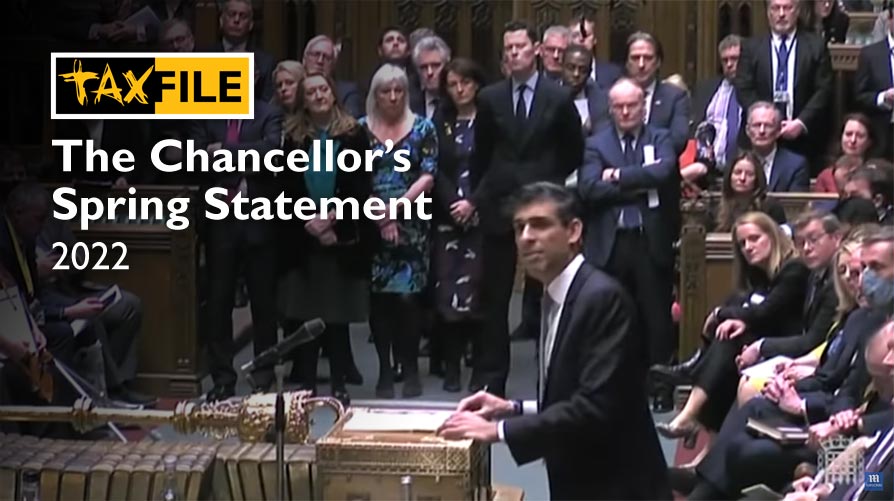
The Chancellor Rishi Sunak unveiled his Spring Statement for 2022 on 23 March and in some ways it was more like a mini budget.

Key takeaways from the Spring Statement include:

  • The earnings threshold at which you start to pay National Insurance Contributions (NICs) will increase to £12,570 from July 2022. This is currently set at £9,880 (correct at time of writing, March 2022), so will leave people with more money in their pockets.
  • Class 2 NICs for the self-employed will also reduce, from April 2022, to zero for profits between £6,515 and £9,568
  • 5p per litre has been cut immediately from fuel duty.
  • The basic rate of income tax will reduce from 20% to 19% starting in April 2024.
  • The Employment Allowance will increase to £5,000 per annum from April 2022. Currently it’s set at £4,000. The allowance reduces the NICs that employers have to pay.
  • VAT on materials that save energy will be reduced from 5% to zero from April 2022. This should reduce the cost of things like solar panels, heat pumps and insulation.
  • Councils in England will be able to pass on their share of an additional £500m in extra Government support via the Household Support Fund. The new tranche is for the period 2022/23. The fund helps vulnerable residents, via councils, with short-term help with things like fuel and household bills, food, clothing and other essentials. The previous tranche ends on 31 March 2022, so this is timely.

Watch the Chancellor’s 28 minute Spring Statement 2022, as delivered to the House of Commons, in the video above (skip any adverts). Alternatively get all the detail in the House’s briefing summary here. There’s also a Read more

New Taxfile Brochure - Download Here

New Taxfile Brochure – Download Here

New Taxfile Brochure - Download Here.

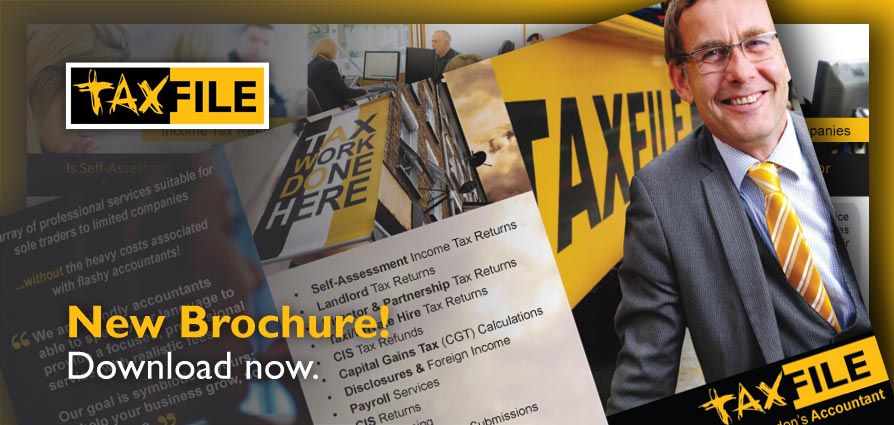
The new Taxfile brochure is out and you can download it here. Even if you’re an existing client, it’s worth taking a look in case we can help you in ways you weren’t aware of. We can help anyone e.g. the self-employed, directors of limited companies, partners in partnerships, sole traders, retired people, landlords, taxi and cab drivers, construction workers and just about anyone.

The new brochure covers:

  • Self-assessment income tax returns;
  • Services for SMBs;The new brochure from Taxfile - accountants and tax advisers in Tulse Hill, Dulwich, South London & the South West.
  • Accounts work for limited companies;
  • Bookkeeping and bank reconciliation;
  • Payroll & PAYE tax and National Insurance, company pensions and more;
  • VAT help, including for VAT schemes, registration and VAT returns;
  • Company pensions (auto-enrolment etc.);
  • Corporation Tax returns;
  • Confirmation Statements;
  • Making Tax Digital (MTD);
  • CIS calculations and tax rebates for construction workers;
  • Help with tax complications;
  • Taxfile brochure - inside spread.Dealing with HMRC on your behalf;
  • Joining or leaving various tax schemes;
  • Capital Gains Tax (CGT) calculations and handling;
  • Tax calculations relating to property income for landlords;
  • Disclosures of income not previously taxed (e.g. from abroad);
  • And much more.

Forward to a Friend – Free Consultation

Please feel free to forward the new Taxfile brochure to a friend who could benefit from our accountancy and tax-related services. We offer a free 20-minute consultation for new clients, without obligation.

020 8761 8000 Book Appointment Download Brochure

We are open 6 days a week during February including Saturday mornings (by appointment) and later opening (until 6pm) on Mondays and Tuesdays.