Posts

Are you self employed? If so, Joe from Taxfile has some quick advice for you

Are you self employed? Advice from Taxfile

Are you self employed? Joe from Taxfile has some quick advice for you

Are you self employed? If so, Joe from Taxfile has some quick advice for you:

Class 2 National Insurance

It is important to register for Class 2 National Insurance. A lot of people don’t have this set up correctly and, if not sorted, then it can greatly affect your pension in the future. Class 2 National Insurance isn’t a lot of money, so speak to one of our advisors to make sure you’re set up. Finding out missing years is also possible.

Tax Returns

Try to file your tax return early. A major benefit to this is knowing what your tax liability will be long before it is due. That way, you can plan ahead or even set up a payment plan.

If you are filing your return late, then it is very important to try to get up to date as soon as you can. Apart from the initial £100 penalty for late returns, you will eventually end up paying a £10 per day penalty too if you don’t get up to date soon enough. That can soon spiral out of control. HMRC is very good at helping people who are struggling, but they can’t help if you bury your head in the sand. Penalties for late tax returns can be appealed but you must have very a good reason, like illness or death in the family.

Are you claiming the right expenses?

Speak to one of our agents about allowable expenses. A lot of people don’t claim the right expenses and can end up overpaying their tax. We can help with that, so you save unnecessary tax.

Contact Taxfile

Speak to Taxfile for any of your tax needs. Our staff skills are so versatile that, between us, there is nothing accounting- or tax-related that we can’t help with.

Call Taxfile on 020 8761 8000 or email your tax-related query and we’ll be happy to help. We also offer a free 20-minute introductory appointment if you’d like to meet us in person or virtually through a video or telephone call — whatever you prefer. We are accountants and tax advisors in Tulse Hill/Dulwich South London.

This post was brought to you by Joe at Taxfile.

PAYE, 2021/22 Tax Thresholds, Employment Allowance & P800s

PAYE, 2021/22 Tax Thresholds, Employment Allowance & P800s

PAYE, 2021/22 Tax Thresholds, Employment Allowance & P800s

My name is Daniel and I have been a part of the Taxfile family since 2007. It started as a part-time job doing bookkeeping, but as time went on, I developed new abilities and a deeper understanding of the tax world. PAYE, VAT, and Company Register are now my areas of expertise.

I understand how complicated the tax world is, so here are a few PAYE things to consider:

Understanding the tax thresholds for 2021-2022

PAYE is calculated based on how much you earn and whether you are eligible for the personal allowance.

  • Standard Rate: PAYE income tax is charged at 20%, less a personal allowance of £12,570, this is signified by tax code 1257L.
  • Higher Rate: For most, income over £50,270 to £150,000 is charged at 40%.
  • Additional Rate: Income above £150,000 is charged at 45%.

What is the Employment Allowance?

The Employment Allowance allows certain businesses that employ workers to reduce their annual National Insurance (NI) bill by up to £4,000 (for the 2021/22 tax year).
Eligible businesses can claim a reduction against their employer’s Class 1 NI liability up to a maximum of £4,000 each tax year. You can still claim the allowance if the liability was less than £4,000 in a tax year.

You can’t claim if you’re a company with only one employee paid above the Class 1 National Insurance Secondary Threshold (£8,840 for the 2021/22 tax year, up from £8,788 for the 2020/21 tax year) if that employee is also a director of the company.

How will I know if I haven’t paid the right amount of PAYE?

HMRC will send out a P800 tax calculation form after the tax year ends on 5 April, which you should receive by the end of November. This will show how much tax is due to be refunded, or is owed for previous years.

Another significant aspect of Taxfile is that it works with a wide range of accounts software (Sage, QuickBooks, Xero, FreeAgent, VT, Forbes, Moneysoft, and so on) and can accommodate everyone. These are just a few examples, but if you need assistance with any area of PAYE, VAT, or other types of tax, Taxfile and the team are here to help. Call Taxfile on 020 8761 8000, book a free appointment (in-person and phone or video call options are available) or simply message us your tax-related query and we’ll be happy to help. We are accountants and tax experts in South London.

This post was brought to you by Daniel at Taxfile.

Get peace of mind by using an experienced and friendly team of tax advisers and accountants

Peace of Mind from Using an Experienced Tax Team

Get peace of mind by using an experienced and friendly team of tax advisers and accountants

When using Taxfile, you are using an experienced team that will make dealing with your tax affairs seamless. A lot of clients start by coming into our office stressed and overwhelmed, not knowing where to start. Using your current position and needs, we plan a step-by-step approach to keep you on top of your affairs and the relationship between you and HMRC harmonious. Once you are officially on board with us, we will have access to your HMRC record and, with our dedicated agent lines to HMRC, we’ll be able to speak to them on your behalf. This way, you are free from having to call them yourself and wait longer than we do for a call handler. You can also have any issues or queries explained to you in an easy to understand way by our friendly team. If you receive any letters that from HMRC and you don’t understand anything, we will be able to take a look for you and explain what it’s all about.

Any fee you pay Taxfile is tax deductible, so will be put on your tax return and result in a reduction of tax.

Our up-to-date knowledge of the tax system will give you peace of mind, alleviate any anxiety you may have and make the whole experience very different to how a lot of people find it when they are not using a team like ours. We know the best way to approach a tax situation that, without our experience and knowledge, could otherwise result in a lot more time and money being spent unnecessarily. From something as small as missing a tax return deadline, it can spiral into something a lot bigger, potentially including penalties, late payment interest, debt collection agencies being involved and so on. We inform all our clients of upcoming deadlines, for their particular tax situation, and let them know what needs doing and when, avoiding this situation and many more.

Unlike a lot of other companies, our tax experts and accountants are approachable, accessible and happy to help. We’re a unique tax advisor and accountancy practice like no other, with offices in Tulse Hill and Dulwich. We can help with any tax-related issues, including bookkeeping, filling in a tax return, limited company accounts, help accounting for property lettings tax refunds and anything accountancy-related. Call Taxfile on 020 8761 8000, book a free 20-minute appointment with us (remote or in-person options available) or simply email us your tax-related query here.

This post was brought to you by Julie at Taxfile.

EU VAT – The BREXIT Effect

EU VAT – The Brexit Effect: changes in EU VAT treatment are coming on 1 July 2021 for EU B2C transactions.

Changes in EU VAT is incoming from 1st July 2021 for Business to Customer (B2C) sales for those operating within the EU.  The changes need to also be considered for businesses in the UK, post-Brexit, that wish to sell online directly to the customer.

The new EU VAT E-commerce package is comprised of two key components;

  • One Stop Shop (OSS)
  • Import One Stop Shop (IOSS)

It is not compulsory to report VAT using either of these methods, the option is still available to register for VAT in each EU country you wish to do trade with and account and pay VAT in each of those territories.  However, reading that, you would wonder why you would take on such a task, when you can just do one VAT return, where the liabilities are then paid to each country where the B2C transaction occurred.  However, importantly, these 2 methods can only be used for Read more

Taxes & Cryptocurrency

How crypto currency in the UK is treated for tax by HMRC

According to HMRC, ‘cryptoassets’ are cryptographically secured digital representations of value or contractual rights that can be:

  • transferred
  • stored
  • traded electronically

There are various types of cryptoassets including exchange tokens, utility tokens, and security tokens. HMRC does not consider cryptocurrency to be currency or money & their complete Cryptoassets Manual can be found HERE.

As far taxes are concerned, investing in cryptocurrency is akin to investing in other assets such as stocks, bonds, and the sale of rental properties.  This means that capital gains and losses rules apply when you ‘dispose’ your assets, and in this case your cryptocurrency.

HMRC explains that disposals include:

  • selling cryptocurrency for money
  • exchanging cryptocurrency for a different type of cryptocurrency
  • using cryptocurrency to pay for goods or services
  • giving away cryptocurrency to another person

Any of the above situations subject any profits to Capital Gains Tax (CGT) and the simple formula for calculating capital gains (or losses) is:

Fair Market Value – Cost = Profit or Loss

The fair market value is the market price of the asset at the time that you sold, traded, or disposed of it.  The cost is the price you paid at the time of the purchase.

Although this is a simple and logical calculation, calculating CGT on your profits becomes a bit more complex when you have multiple transactions to account for.  The UK requires a specific type of method for calculating the cost basis of your coins known as Shared Pool Accounting also known as a 104 Pool.

With the shared pooled accounting method, you are essentially Read more

Tax “Payment Plans” are ENDING – Act NOW if you Owe Tax!

Tax Debt “Payment Plans” are Ending - Act NOW if you Owe Tax!

Are you late paying your tax? Do you owe unpaid tax for the last financial year, or earlier? Are you struggling to pay it?

Taxfile has recently been helping some of our customers with tax debts from 2019/20 and earlier. In particular, we’re helping them to arrange payment plans with HMRC as part of their ‘Time to Pay‘ scheme. This spreads the cost of those tax debts instead of paying them off in one go. This is really useful to those who are struggling financially following the pandemic. The new payment plans are only available until 1 April 2021, though, so really you should apply by 31 March 2021. Our advice is to act now if you are in a position to take advantage of the payment plans while they’re still — just about — available.

The benefits of arranging a tax payment plan now

Agreeing a payment plan with HMRC will help avoid the 5% late payment penalty that’s usually charged on outstanding tax not paid by the deadline. And, of course, spreading the cost helps those who might otherwise struggle to get together the full amount in one transaction. The HMRC interest rate seems relatively low too.

How Tax Payment Plans have gone so far

What we’ve found so far is that Read more

Furlough Scheme Extended until End of September

Furlough Scheme Extended until End of September

In The Chancellor’s 2021 budget speech it was announced that the furlough scheme would be extended until the end of September 2021, to protect the jobs and livelihoods of the UK population during the pandemic.

The Government will pay employees 80% of the hours not worked through to the end of June 2021.  As the country opens up it will then offer 70% with the employer to contribute the other 10%, then in August through to the end of September they will ask the employer to pay 20% while the Government covers the remaining 60%, so the employee continues to receive the 80% of their income for the hours not worked.

If you or your business need help setting up a payroll and help with the furlough scheme, then please do not hesitate to contact us on 020 8761 8000.

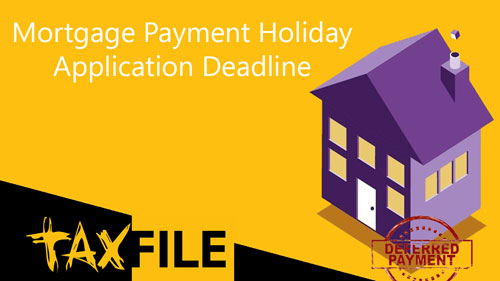
Mortgage Holidays ENDING

Mortgage Holiday Deadline Looming

Could you do with a few months’ mortgage holiday?

The availability of a three month mortgage holiday was first announced in March 2020, as part of a package of support for individuals as COVID-19 spread rapidly through the UK.  For the 1.8M people that took up the initiative in March, the holidays came to an end in June 2020, while the pandemic still raged on.

Mortgage lenders then announced their own support if your income had been affected by the pandemic, with a repayment holiday of up to a maximum of six months.

If you have not taken any holidays on your mortgage payments yet, you can apply for a payment holiday of up to six months in total.  However, you should continue to make payments if you can afford to.  The deadline for applying for a repayment holiday is 31st March 2021, so act now if you have not applied for a mortgage holiday and are still suffering a cash flow constraint due to the pandemic. Applying by end of March can still get you a mortgage holiday until 31 July 2021.

Your payment holiday can be up to a maximum of six months. If you have already taken the full six-month payment holiday, you cannot apply for another one, however your lender might be able to help you in other ways.  Contact them so you don’t miss a mortgage payment and adversely affect your credit rating.

If you have already taken a payment holiday but not for the full 6 months, then this can be extended up to the maximum term. However, it’s in your best interests to start your repayments again if you can afford to.

Note that cancelling your direct debit is not a payment holiday and will be counted as a missed payment if it has not been agreed with your lender — possibly resulting in your credit file being adversely affected and impacting your ability to re-mortgage.

The main options your lender may consider for repayment once your mortgage payment holiday period is over are:

  • Spreading your deferred payments over the outstanding term of your mortgage by increasing your monthly mortgage repayments.
  • Increasing the length of your mortgage term, resulting in a smaller increase in your monthly repayments.
  • Making interest-only or capital-only repayments during your mortgage holiday.

There is help for you out there and it can be flexible, but ultimately it needs you to ACT NOW. Call your lender by 31 March or you will simply miss out.

Bounce Back Loan Applications & Top-Ups ENDING

Bounce Back Loan Scheme: applications & top-ups deadline (31 March 2021)

Applications for the Bounce Back Loan Scheme (BBLS) come to a close on 31st March 2021.

The purpose of the scheme was to allow small businesses, regardless whether they were sole traders, partnerships, or limited companies, a way of getting a cash flow worth 25% of their turnover (within the range of £2-£50k) to support them during the pandemic.  This is a great way to get a cash injection with a very small interest repayment (2.5% over 6-years, where the Government will pay the first 12 month’s interest on your behalf).

The deadline for Bounce Back Loan applications is Wednesday 31st March 2021.  If you have not applied for the BBLS and need money to pay tax debts or to get your business moving again, then we recommend you make an application directly with your bank before time runs out.

If you have already taken out a BBLS, you can apply for a top-up to their existing Bounce Back Loan if you originally borrowed less than the maximum amount available to you.  The top-ups are only available from your existing BBLS lender & you can apply for the lesser of £50k or 25% of the annual turnover the borrower certified in their original successful BBLS application form, minus the value of the original loan given to you.

If you need any assistance with your application then please do not hesitate to contact us on 020 8761 8000.