IMPORTANT: the video mentions the original deadline in April 2023. This has now been extended to 5th April 2025.
Do you have gaps in your National Insurance record? If so, it could mean that you could get a lower State Pension when you reach state retirement age, particularly if you are aged between approximately 45 and 70 at the moment. Generally speaking, you need 10 years of contributions for a basic state pension and around 30 to 35 years for a full state pension. It does vary by circumstance though and, even with gaps, some people might have enough qualifying years for the full state pension already.
Urgently Check Whether You Have National Insurance Gaps
Our advice is to urgently check whether you do have any gaps in your National Insurance record. If so, in many cases it would be wise to make some one-off payments to plug any gaps for the years 2006 to 2016. However, there is limited time to do so despite the deadline for this opportunity having been extended from early April to the end of July 2023 [UPDATE: This has now been extended again to 5th April 2025]. Thereafter, the chance to fix all 11 years from 2006 to 2016 will be gone forever. Read more
https://www.taxfile.co.uk/wp-content/uploads/2023/04/NI-boost-to-State-Pension.jpg900900Markhttps://www.taxfile.co.uk/wp-content/uploads/2020/03/taxfile-logo-2020.pngMark2023-04-21 10:24:042025-03-13 15:08:20Boost State Pension by Plugging Gaps in National Insurance
[As at 1 February 2023]: The 31st January was the Self Assessment tax return and tax payment deadline. Miss the deadline and you’ll be in for a £100 HMRC fine right away. Interest will also be charged from 1 February, as usual, if tax is not paid by midnight on 31 January (rules apply). Time is short, so contact Taxfile for help with your tax return as soon as possible please. Book an appointment* with one of our helpful tax advisors and accountancy experts TODAY — we’ll make it easy!
https://www.taxfile.co.uk/wp-content/uploads/2017/01/0-DAYS-featured-square.jpg338338Markhttps://www.taxfile.co.uk/wp-content/uploads/2020/03/taxfile-logo-2020.pngMark2023-01-29 11:48:182023-02-01 12:24:4731st January was the Self Assessment Tax Return Deadline!
Today we look at the tax-free allowance thresholds for what’s officially known as the tax-free Personal Allowance in the tax and accountancy world.
The Tax-Free Personal Allowance
This is the amount a UK individual can earn as income before they have to pay any Income Tax. In the current tax year (6 April 2022 to 5 April 2023) individuals can earn up to £12,570 before they have to start paying Income Tax, as you’ll see in the first table. In other words, if their taxable income is two thousand pounds more than that, they’ll only have to pay income tax on the extra £2000, not the core £12,570. There are exceptions, and different rules applied before 2016/17, but our aim is to keep things simple in this guide rather than focusing on more rare exceptions. So, below, we show the Personal Allowance thresholds for tax-free income over the last 7 tax years. As you will see, the Tax-Free Personal Allowance has gradually increased over the years.
Tax Bands for Basic Rate, Higher Rate and Additional Rate Taxpayers
The tables also show the various tax bands for earnings above the Personal Allowance threshold. These are the Basic Rate, Higher Rate and Additional Rate income tax bands, with tax rates increasing the more people earn. The information might be useful if you owe income tax from previous years but bear in mind that anyone born prior to 6 April 1948 may be entitled to a larger Personal Allowance.
Please note: this guide focuses only on Income Tax. Taxpayers will also need to allow for other deductions like National Insurance, which we’ll cover in a separate guide, and things like pension contributions, any student loan interest repayments, any tax on dividends, and so on.
Tax-Free Allowance Thresholds 2022/23
For the tax year 6 Apr 2022 to 5 Apr 2023:
The first £12,570 (your Personal Allowance) is tax-free*
Earnings between £12,571 and £50,270 are taxed at 20% (‘Basic Rate’ income tax)
Earnings between £50,271 and £150,000 are taxed at 40% (‘Higher Rate’ income tax)
Earnings over £150,000 are taxed at 45% (‘Additional Rate’ income tax)
* For every £2 earned above £100,000, the Personal Allowance is reduced by £1. It therefore reduces to zero for earnings of £125,140 or more.
Tax-Free Allowance Thresholds 2021/22
For the tax year 6 Apr 2021 to 5 Apr 2022:
The first £12,570 (your Personal Allowance) is tax-free*
‘Basic Rate’ earnings between £12,571 and £50,270 are taxed at 20%
‘Higher Rate’ earnings between £50,271 and £150,000 are taxed at 40%
‘Additional Rate’ earnings over £150,000 are taxed at 45%
* For every £2 earned above £100,000, the Personal Allowance is reduced by £1. It therefore reduces to zero for earnings of £125,140 or more.
Tax-Free Allowance Thresholds 2020/21
For the tax year 6 Apr 2020 to 5 Apr 2021:
The first £12,500 (your Personal Allowance) is tax-free*
‘Basic Rate’ earnings between £12,501 and £50,000 are taxed at 20%
‘Higher Rate’ earnings between £50,001 and £150,000 are taxed at 40%
‘Additional Rate’ earnings over £150,000 are taxed at 45%
* For every £2 earned above £100,000, the Personal Allowance is reduced by £1. It therefore reduces to zero for earnings of £125,000 or more.
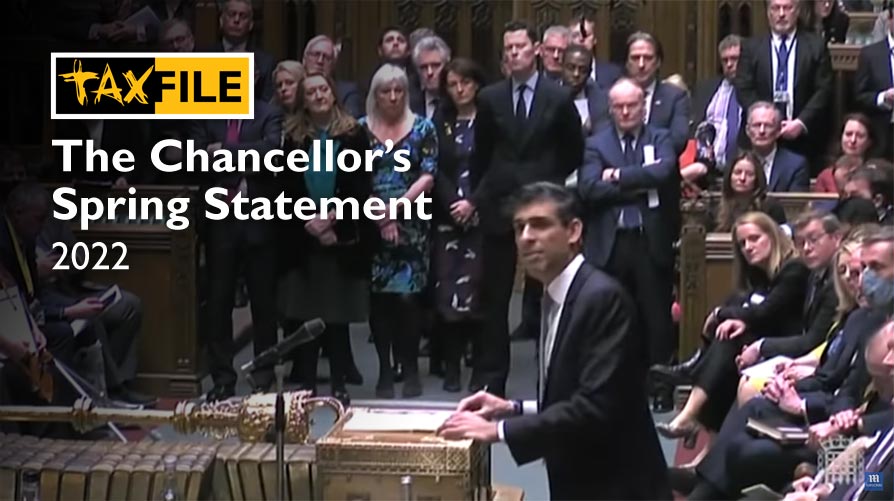
The Chancellor Rishi Sunak unveiled his Spring Statement for 2022 on 23 March and in some ways it was more like a mini budget.
Key takeaways from the Spring Statement include:
The earnings threshold at which you start to pay National Insurance Contributions (NICs) will increase to £12,570 from July 2022. This is currently set at £9,880 (correct at time of writing, March 2022), so will leave people with more money in their pockets.
Class 2 NICs for the self-employed will also reduce, from April 2022, to zero for profits between £6,515 and £9,568
5p per litre has been cut immediately from fuel duty.
The basic rate of income tax will reduce from 20% to 19% starting in April 2024.
The Employment Allowance will increase to £5,000 per annum from April 2022. Currently it’s set at £4,000. The allowance reduces the NICs that employers have to pay.
VAT on materials that save energy will be reduced from 5% to zero from April 2022. This should reduce the cost of things like solar panels, heat pumps and insulation.
Councils in England will be able to pass on their share of an additional £500m in extra Government support via the Household Support Fund. The new tranche is for the period 2022/23. The fund helps vulnerable residents, via councils, with short-term help with things like fuel and household bills, food, clothing and other essentials. The previous tranche ends on 31 March 2022, so this is timely.
https://www.taxfile.co.uk/wp-content/uploads/2022/03/Spring-Statement-2022.jpg501894Markhttps://www.taxfile.co.uk/wp-content/uploads/2020/03/taxfile-logo-2020.pngMark2022-03-24 17:16:372025-03-13 13:05:54Key Takeaways from the Spring Statement 2022
The new Taxfile brochure is out and you can download it here. Even if you’re an existing client, it’s worth taking a look in case we can help you in ways you weren’t aware of. We can help anyone e.g. the self-employed, directors of limited companies, partners in partnerships, sole traders, retired people, landlords, taxi and cab drivers, construction workers and just about anyone.
Disclosures of income not previously taxed (e.g. from abroad);
And much more.
Forward to a Friend – Free Consultation
Please feel free to forward the new Taxfile brochure to a friend who could benefit from our accountancy and tax-related services. We offer a free 20-minute consultation for new clients, without obligation.
We’re aware that many people are struggling right now. So, I wanted to personally touch base with you to confirm that, although the official deadline for submission of 2020/21 self-assessment tax returns and tax payments is Monday (31 January), there is now some extra time this year. This is great news for you if you are concerned about missing the deadlines or having to pay an HMRC penalty for being late. It should really take the pressure off for those who are struggling or worried.
For self-assessment tax returns, you now have until midnight on 28 February to submit. HMRC will only charge you a late filing fee if you file later than this.
For self-assessment tax payments, you now have until 1 April to make your payment (or arrange an HMRC payment plan) before incurring an HMRC late tax payment surcharge. While you will still incur interest for late tax payments from 1 February, HMRC’s interest rate is only 2.75% per annum, so even a month’s interest is unlikely to equate to much for most people.
For tax payments on account (payment in advance for the next tax year), there is no HMRC surcharge/penalty if you’re late but it does attract interest. However, again, that’s only at HMRC’s low rate, so is unlikely to amount to much for most.
We are here to help you, so don’t worry if you owe tax or are running late on your tax return. The Taxfile team can help you sort things out, particularly as we have a little longer than usual. We can work something out during February if you are worried about HMRC surcharges, interest and deadlines. Please get in touch if so.
Lastly, don’t forget that we are open on Saturdays during January and February (by appointment) and open later (until 6pm) on Mondays and Tuesdays. Read more
https://www.taxfile.co.uk/wp-content/uploads/2022/01/Guy-Bridger-Taxfile.jpg537537Taxfilehttps://www.taxfile.co.uk/wp-content/uploads/2020/03/taxfile-logo-2020.pngTaxfile2022-01-29 11:18:522025-03-13 15:15:28A Personal Message from Guy Bridger at Taxfile
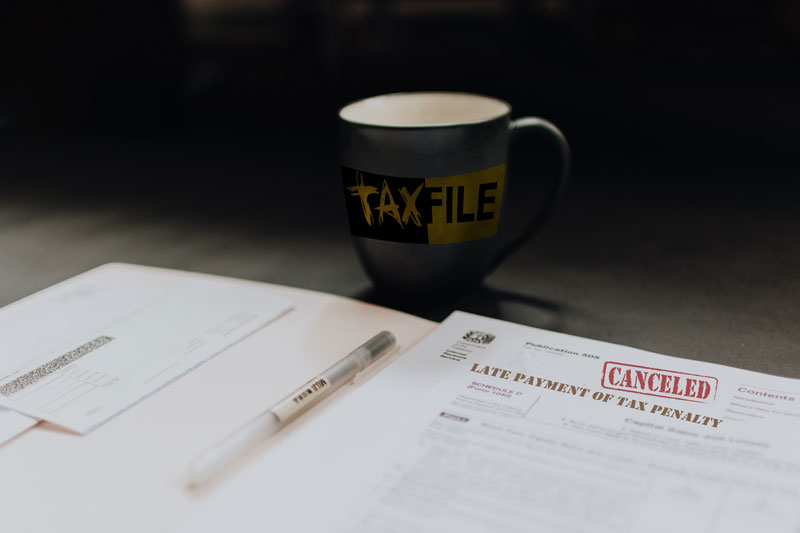
HMRC has taken the decision to not issue a late filing penalty for anyone who does not submit their self-assessment tax return before midnight on 31st January 2022. It is important to point out that the deadline for filing your 2020-21 tax return remains 31/01/22 but the waiving of the penalty allows anyone who is unable to file their self-assessment tax return by the 31/01/22 deadline avoid a £100 late filing penalty as long as they submit their tax return sometime before midnight 28th February 2022.
Furthermore, anyone that is unable to pay their self-assessment tax liability before 31st January 2022 will not receive a late payment penalty if they pay their tax in full, or call HMRC to arrange a payment plan before 1st April 2022. It is important to note that interest will be added on taxes owed from 1st February 2022.
For a second year in a row, due to COVID, an extra Read more
https://www.taxfile.co.uk/wp-content/uploads/2021/02/Late_Payment_Penalty_Relief.jpg533800Taxfilehttps://www.taxfile.co.uk/wp-content/uploads/2020/03/taxfile-logo-2020.pngTaxfile2022-01-10 09:05:492022-01-12 09:15:16HMRC Waives Late Filing & Payment Penalty for 31st January Deadline
Season’s greetings to all our clients and readers and sincere thanks to all of you who have kept us busy with work during 2021 — we really appreciate it.
Here’s a quick reminder of our opening times during the Christmas period and into the New Year. This is for our Tulse Hill office (Thurlow Park Road) and our Dulwich office (Turney Road) except where otherwise indicated.
Friday 24 December 2021 (Christmas Eve): we’re open from 9am until 3pm (Tulse Hill office only).
Saturday 25 December 2021 (Christmas Day): closed.
Sunday 26 December 2021 (Boxing Day): closed.
Monday 27 December 2021 (a public holiday): closed.
Tuesday 28 December 2021 (a public holiday): closed.
Wednesday 29 December 2021: open 9am until 5pm.
Thursday 30 December 2021: open 9am until 5pm.
Friday 31 December 2021: open 9am until 3pm (Tulse Hill office only).
Saturday 1 January 2022 (New Year’s Day): closed.
Sunday 2 January 2022: closed.
Monday 3 January 2022 (a public holiday): closed.
Tuesday 4 January 2022: we re-open from 9am until 6pm.
Wednesday 5 January 2022: open as usual, 9am until 5pm.
Thursday 6 January 2022: open as usual, 9am until 5pm.
Friday 7 January 2022: open as usual, 9am until 3pm (Tulse Hill office only).
Saturday 8 January 2022: open 9am until 1pm by appointment (Tulse Hill office only).
Sunday 9 January 2022: closed.
From week commencing Monday 10 January: open as usual (see footer).
Have You Contacted Taxfile About Your Tax Return Yet?
If you need a self-assessment tax return or any other kind of return and haven’t yet arranged it with us, please arrange an appointment urgently. January becomes frantically busy in the accounting world, so please make the most of the remaining December appointments while they’re still available — thank you. Appointments are by telephone, Zoom, Microsoft Teams, in person (under safety protocols) … Read more
https://www.taxfile.co.uk/wp-content/uploads/2021/12/Christmas-Opening-Times.jpg524894Markhttps://www.taxfile.co.uk/wp-content/uploads/2020/03/taxfile-logo-2020.pngMark2021-12-22 13:59:132025-03-13 13:08:18Christmas & New Year Opening Times at Taxfile
Did you know that Taxfile’s clients are protected from HMRC enquiries, for example for tax returns and similar submissions we make to HMRC? Through a simple, low-cost fee, Taxfile promises to liaise with HMRC on clients’ behalves should HMRC ever want further clarification of figures submitted. This includes HMRC queries following a tax return, VAT return, corporation tax return or payroll submission made by us. Usually, protecting clients from this type of HMRC investigation could mount up in terms of cost, as it can sometimes take hours to deal with, even for tax experts like us. However, with Taxfile’s low cost cover, it’s all covered automatically (within reason, of course*).
The enquiry cover costs only …
£5 for a self assessment income tax return;
£10 for a VAT return;
£25 for a corporation tax return;
£4 for a payroll submission.
(VAT extra). Most accountants would charge you a considerable sum for this level of protection against HMRC enquiries. However, at Taxfile, we spread the cost through the whole business and, as a result, the cost to clients is a fraction of what it could otherwise be. We hope you agree that it’s a very small price to pay for such peace of mind, should the worst happen.
Tax Advisers & Accountants in Tulse Hill & Dulwich, South London
Do ask a staff member if you would like more information or, indeed, if you would like any tax or accountancy help. Telephone 020 8761 8000 or contact us here. We are Read more
https://www.taxfile.co.uk/wp-content/uploads/2021/12/HMRC-enquiry-cover.jpg536894Markhttps://www.taxfile.co.uk/wp-content/uploads/2020/03/taxfile-logo-2020.pngMark2021-12-01 18:02:442025-03-13 13:09:21Taxfile Covers Clients for HMRC Enquiries
https://www.taxfile.co.uk/wp-content/uploads/2021/11/Saturday-open-December-S.jpg406601Markhttps://www.taxfile.co.uk/wp-content/uploads/2020/03/taxfile-logo-2020.pngMark2021-11-22 17:13:162024-01-26 10:51:42Saturday Appointments in December – Book Now for Tax Returns Etc.
We may request cookies to be set on your device. We use cookies to let us know when you visit our websites, how you interact with us, to enrich your user experience, and to customize your relationship with our website.
Click on the different category headings to find out more. You can also change some of your preferences. Note that blocking some types of cookies may impact your experience on our websites and the services we are able to offer.
Essential Website Cookies
These cookies are strictly necessary to provide you with services available through our website and to use some of its features.
Because these cookies are strictly necessary to deliver the website, refusing them will have impact how our site functions. You always can block or delete cookies by changing your browser settings and force blocking all cookies on this website. But this will always prompt you to accept/refuse cookies when revisiting our site.
We fully respect if you want to refuse cookies but to avoid asking you again and again kindly allow us to store a cookie for that. You are free to opt out any time or opt in for other cookies to get a better experience. If you refuse cookies we will remove all set cookies in our domain.
We provide you with a list of stored cookies on your computer in our domain so you can check what we stored. Due to security reasons we are not able to show or modify cookies from other domains. You can check these in your browser security settings.
Other external services
We also use different external services like Google Webfonts, Google Maps, and external Video providers. Since these providers may collect personal data like your IP address we allow you to block them here. Please be aware that this might heavily reduce the functionality and appearance of our site. Changes will take effect once you reload the page.












 The enquiry cover costs only …